

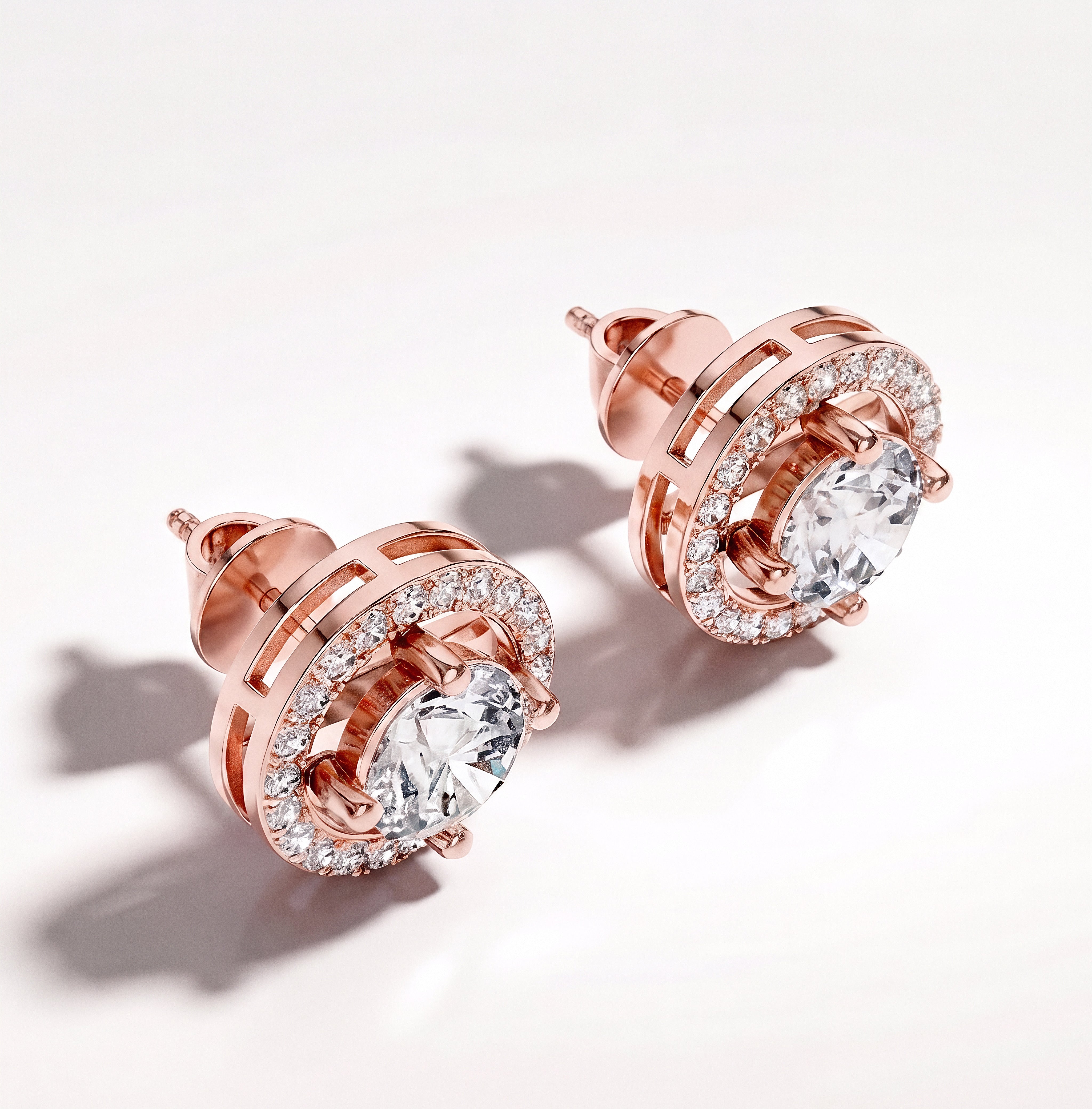
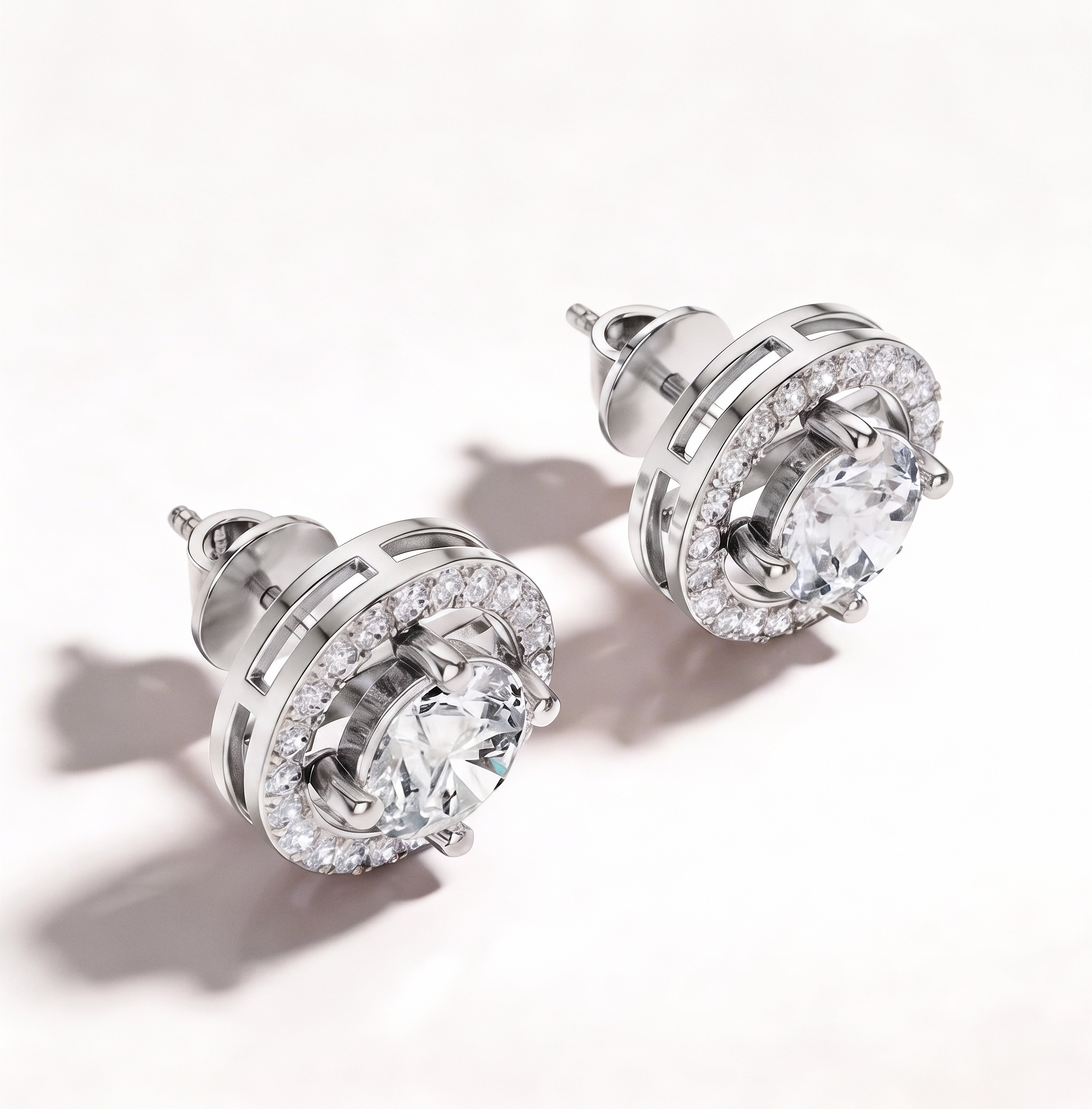
A HALO IS A RING OF TWENTY-TWO CHANCES TO GET IT WRONG
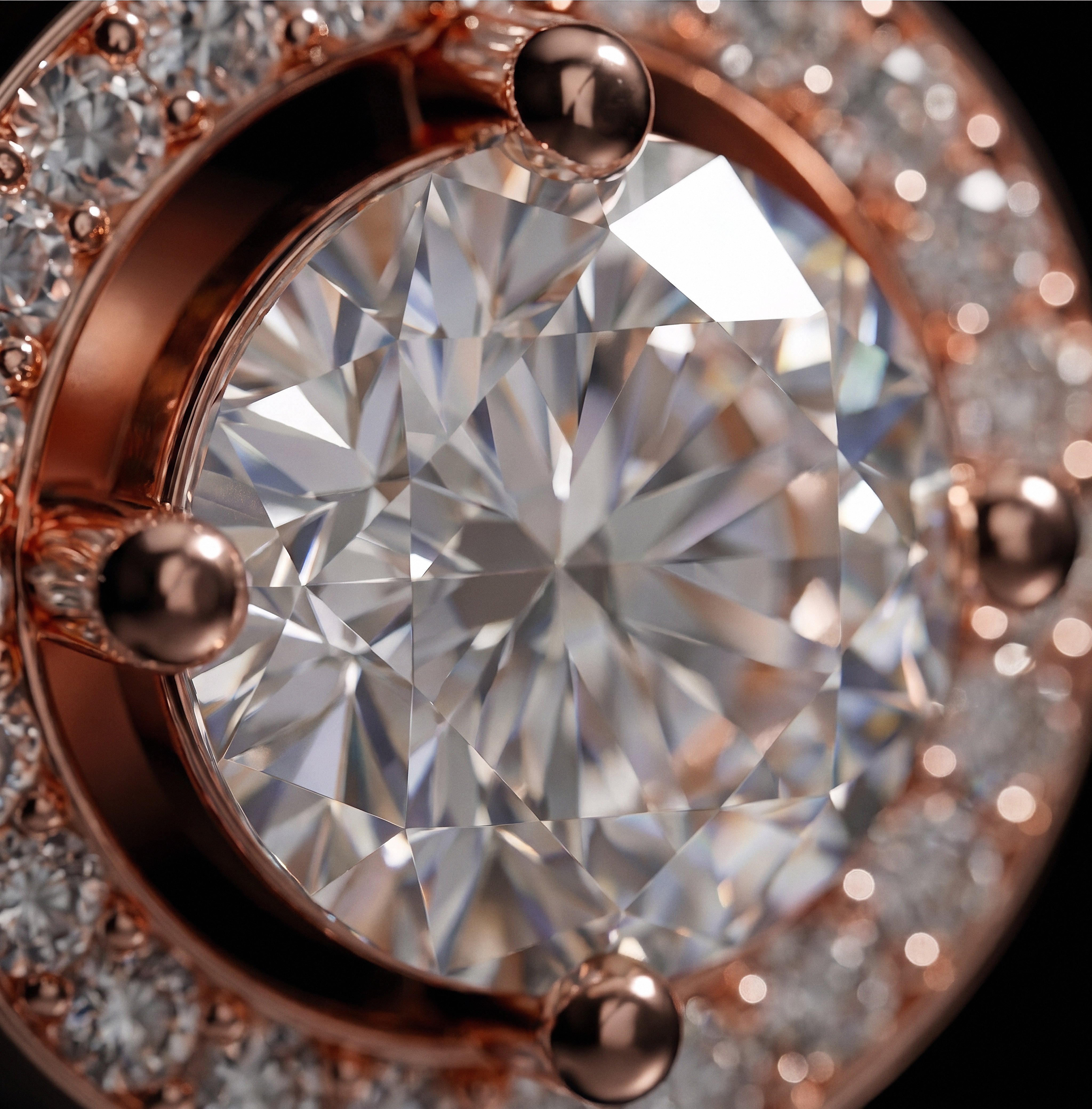
A halo exists to make the stone at its centre read larger than it is. It only works if the eye takes the ring of small diamonds as a continuous band of light rather than as a row of individual stones. That means no gaps, no stone sitting higher than its neighbour, and no widening or narrowing as the circle closes.
The Allison sets twenty-two around each centre — forty-four in all at 1.40 mm. Around a 6.50 mm circle there is very little room to absorb an error, and a single stone out of line does not read as an imperfection. It reads as a gap in a row of teeth.
THE SETTING
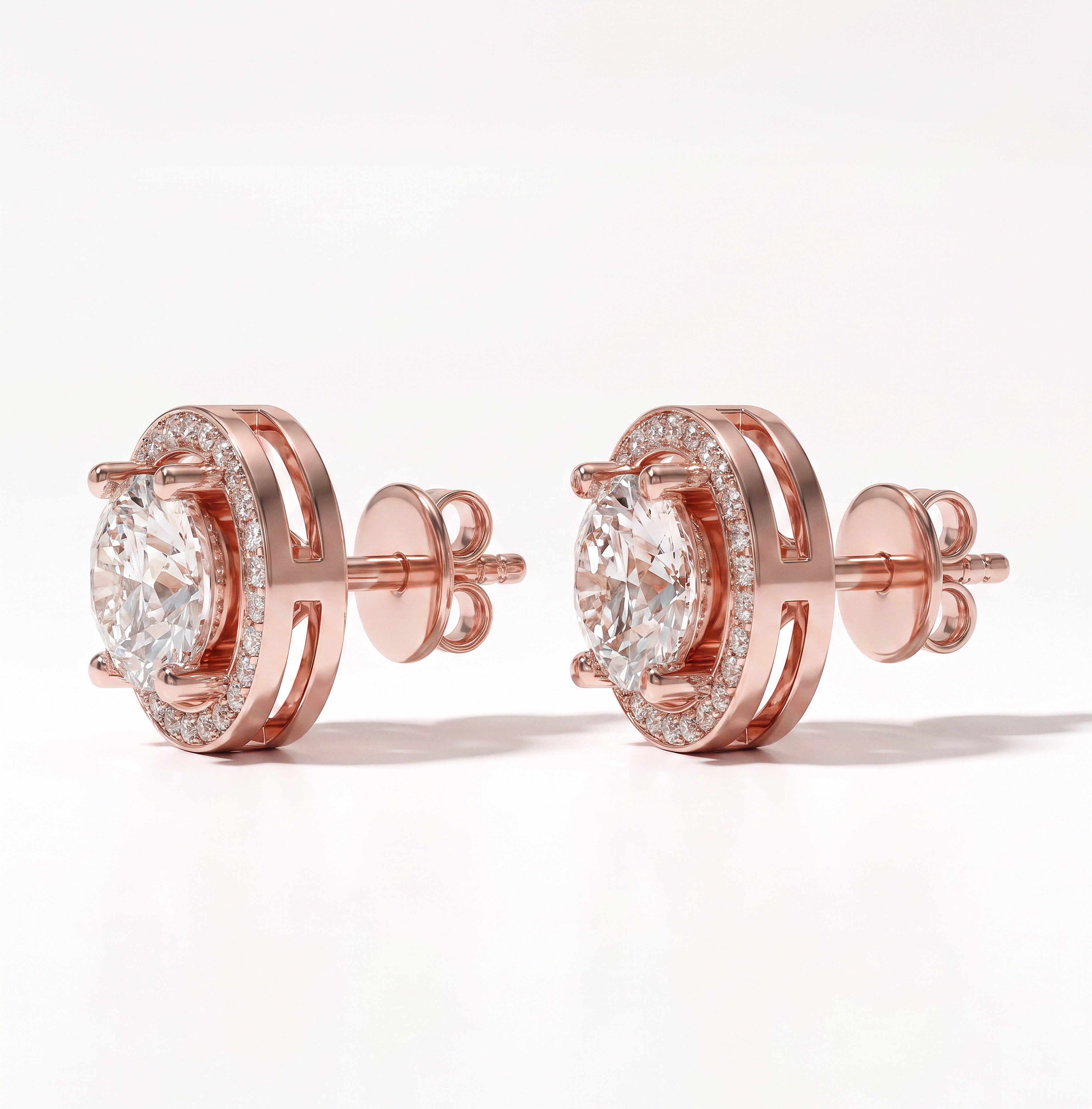
Each centre is a 1.00 carat round brilliant held in four prongs, raised clear of the halo so light can still reach it from the side rather than being walled in by the surrounding stones. Below, the gallery is cut away into an open basket, which does two things: it lets light up through the pavilion of the centre stone, and it takes weight off the earlobe on a stud that is carrying over a carat a side.
The halo itself is bead-set into the rim, the metal raised from the surface rather than added to it.
SPECIFICATIONS
Diamonds — 2 round brilliant centres, 6.50 mm, 1.00 ct each (2.00 ct); 44 round brilliant, 1.40 mm (0.53 ct). 46 stones, 2.53 ct total.
Certification — every diamond of 0.20 ct and above ships with its certificate: GIA for natural, IGI for lab-grown.
Setting — Four-prong centre with bead-set halo, open gallery.
Fastening — screw-back posts.
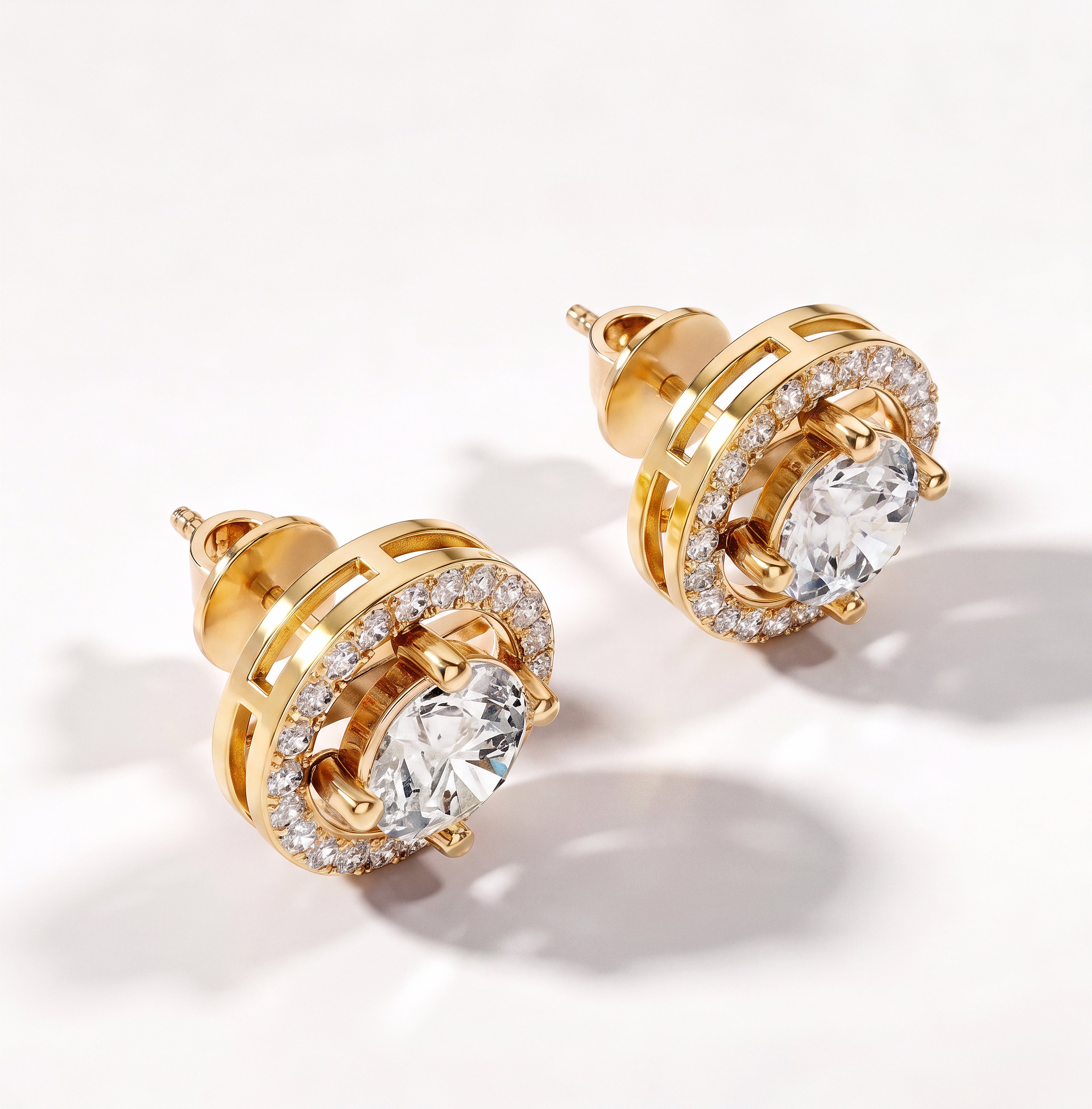
Metal — 14K or 18K gold, in yellow, white or rose. 3.78 g at 14K, 4.45 g at 18K.
Diamond origin — natural or lab-grown, to preference.
Made to order. Two to three weeks from order to dispatch.

Choose options