

THIRTY-SEVEN STONES THAT HAVE TO AGREE
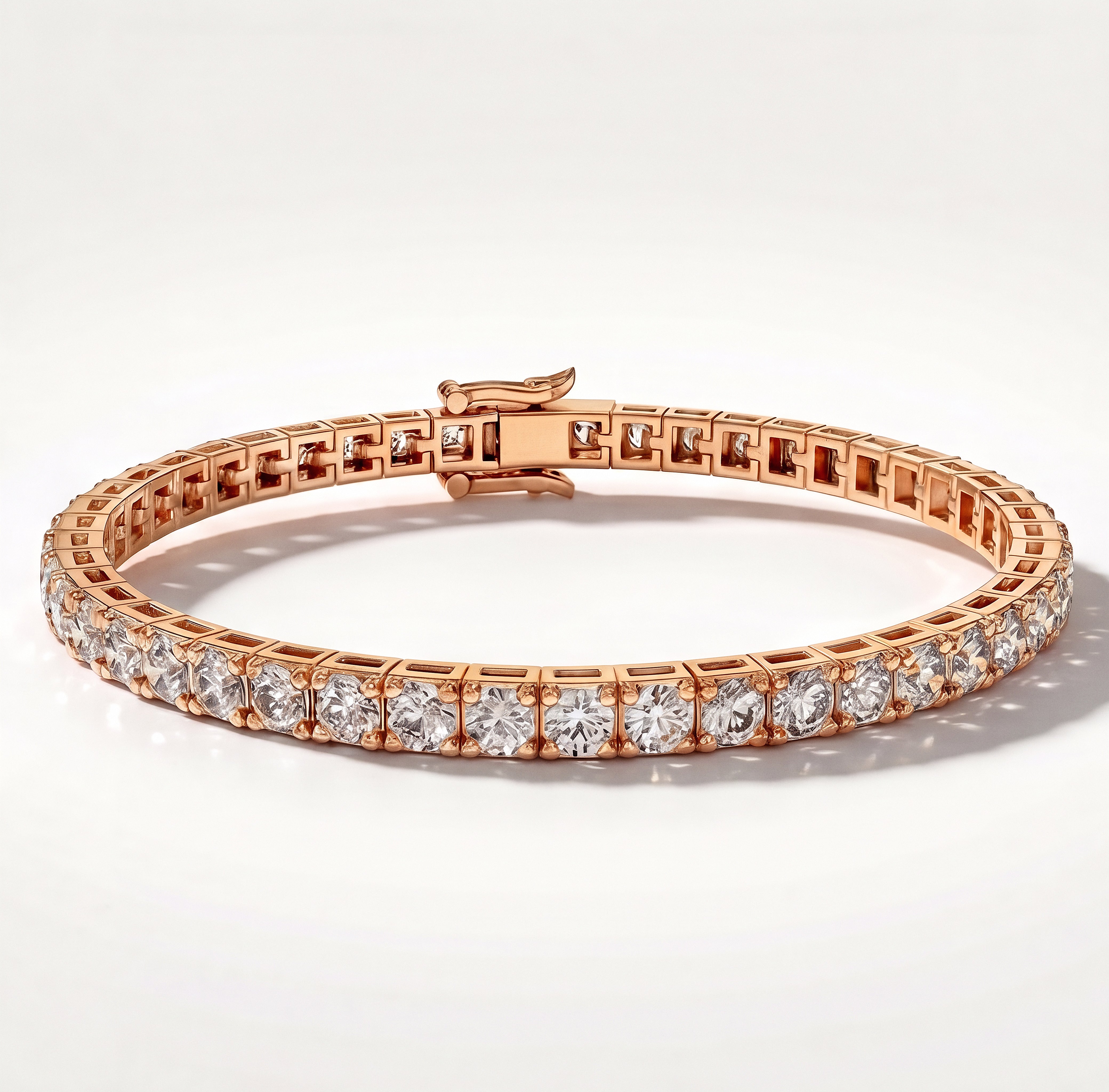
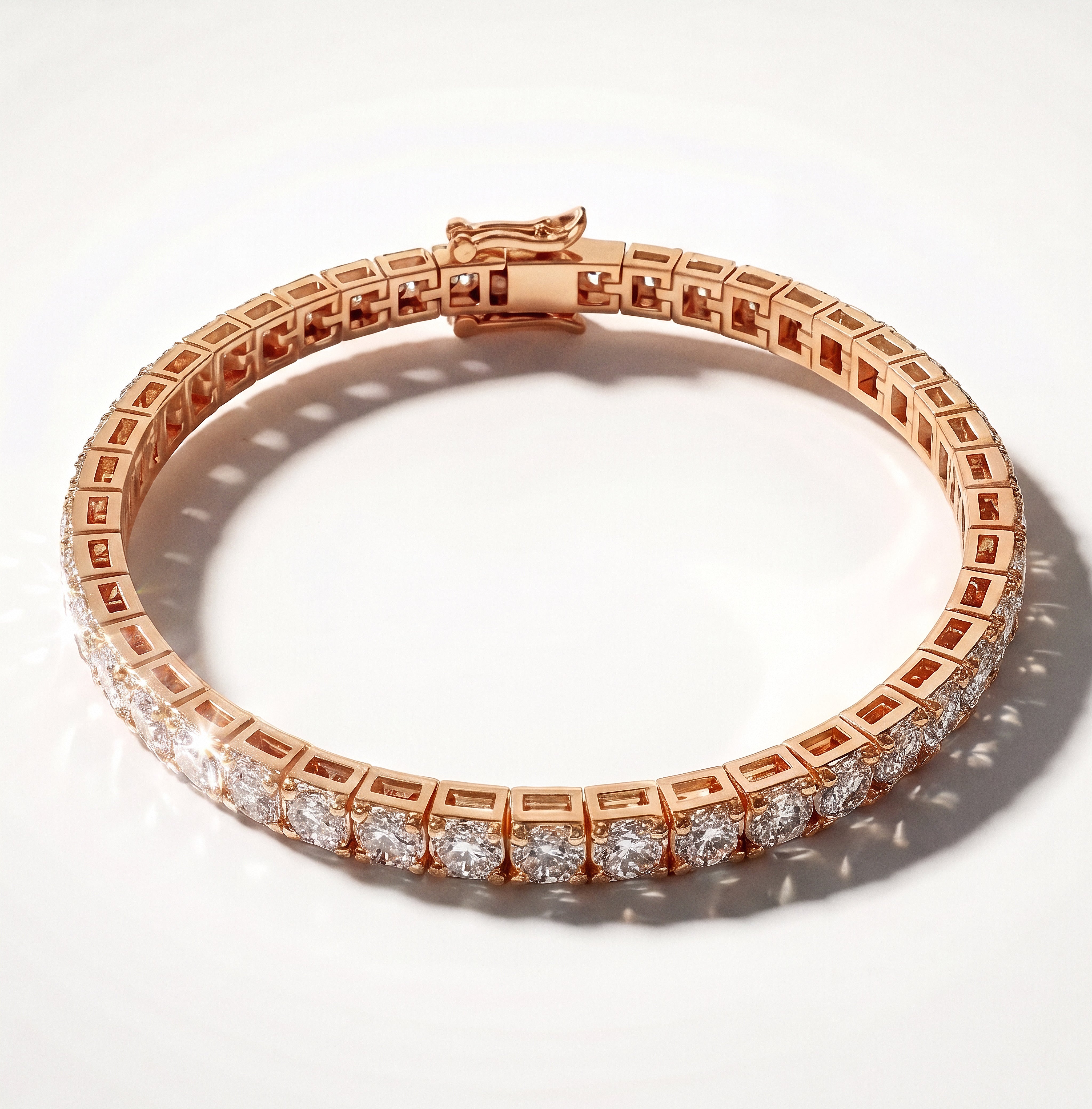
A tennis bracelet looks like the simplest thing in a jeweller's catalogue and is among the hardest to get right. There is no centre stone to carry it, no pattern to distract from a fault, and no fixed orientation — it turns freely on the wrist, so every stone is the front stone at some point in the day.
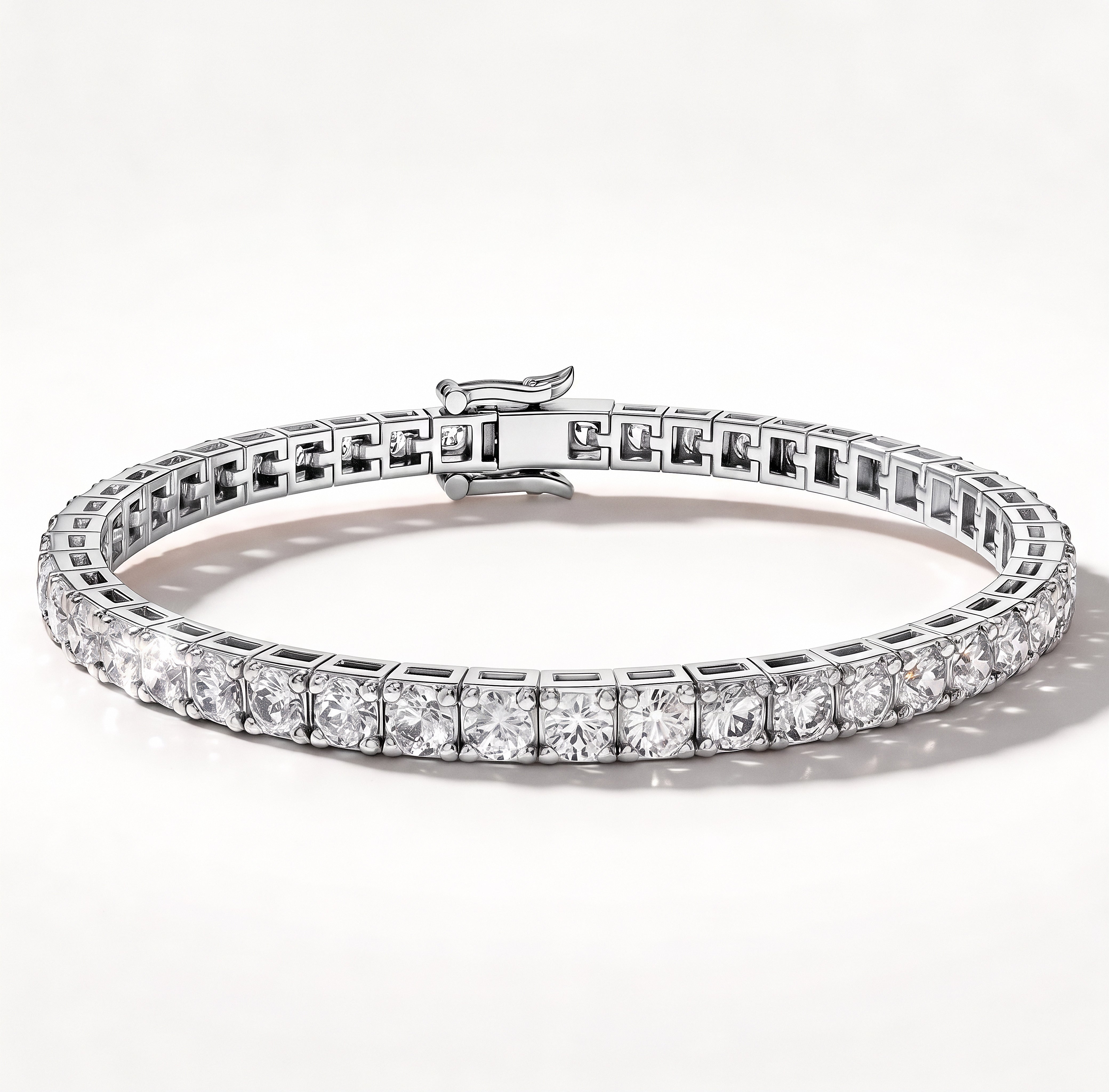
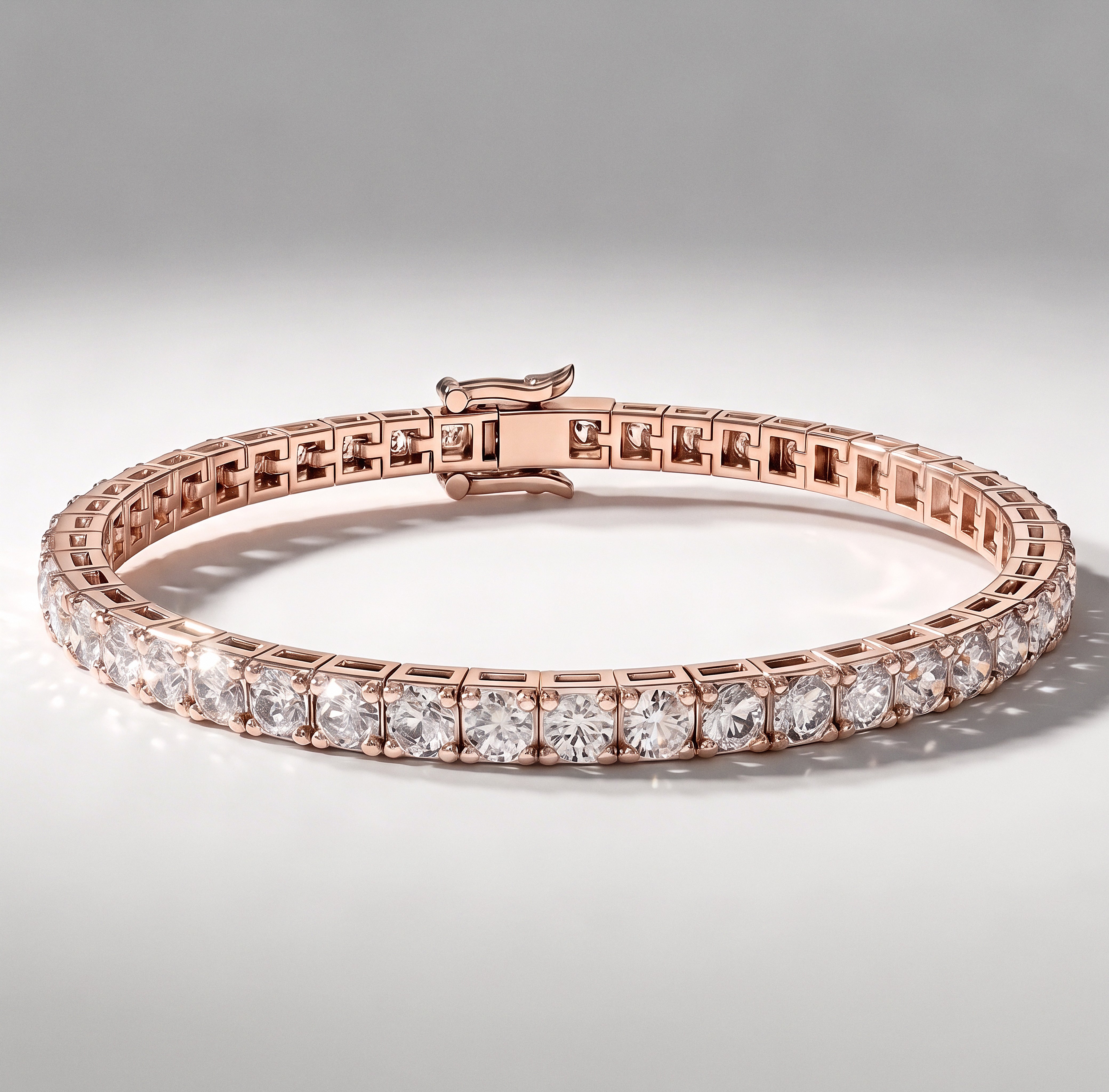
The Claire runs thirty-seven round brilliants at 4.00 mm, 0.30 carats each, 11.10 carats in total. All thirty-seven have to match on colour and clarity, because they will be seen in sequence and the eye reads a row far more critically than it reads a single stone. One that is a shade warmer than its neighbours does not look like a variation. It looks like a mistake.
THE SETTING AND THE STRUCTURE
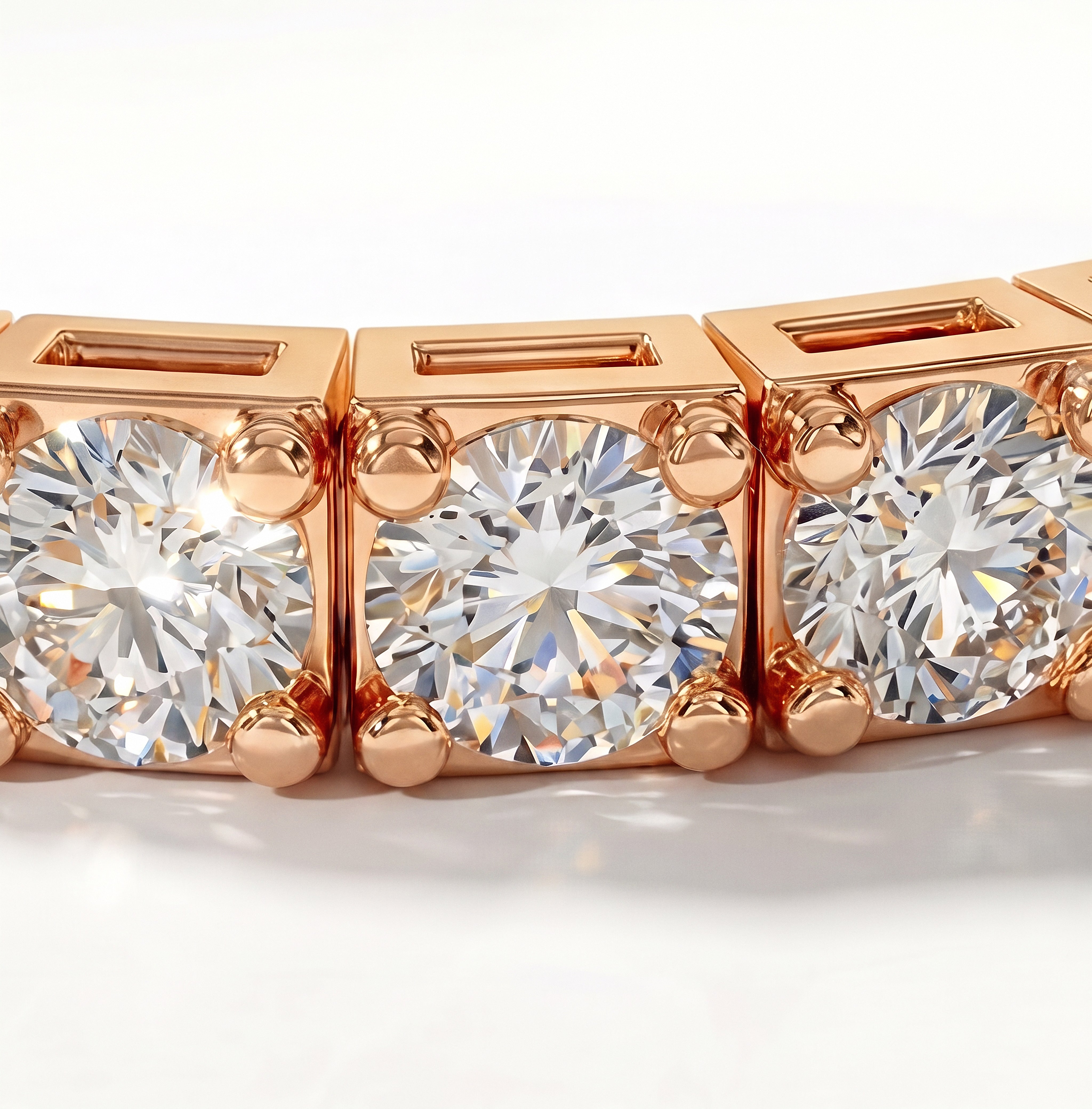
Each diamond sits in its own collet, a collar cut to that stone rather than a shared channel, so the girdle stays open and light enters from the side as well as above.
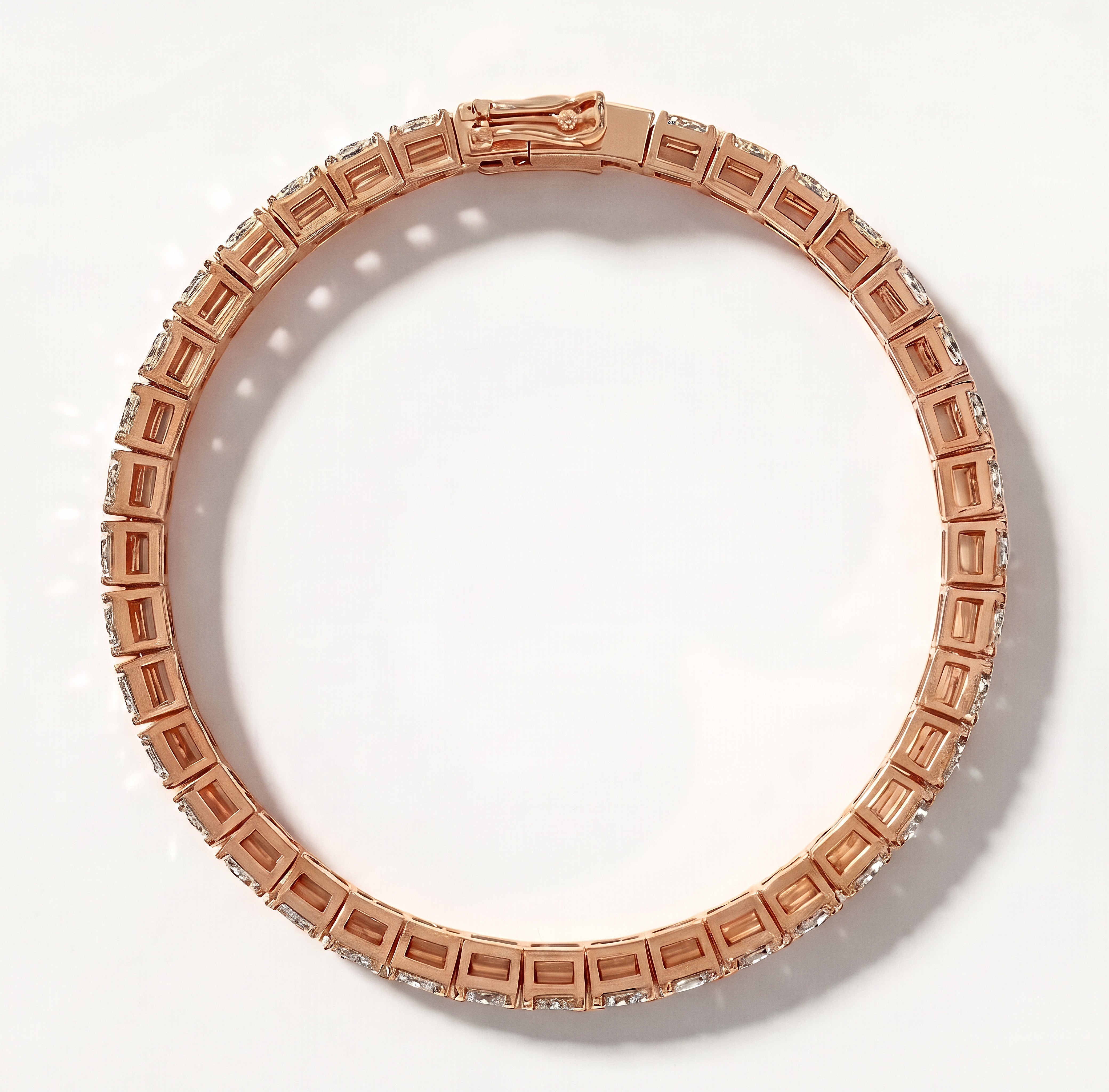
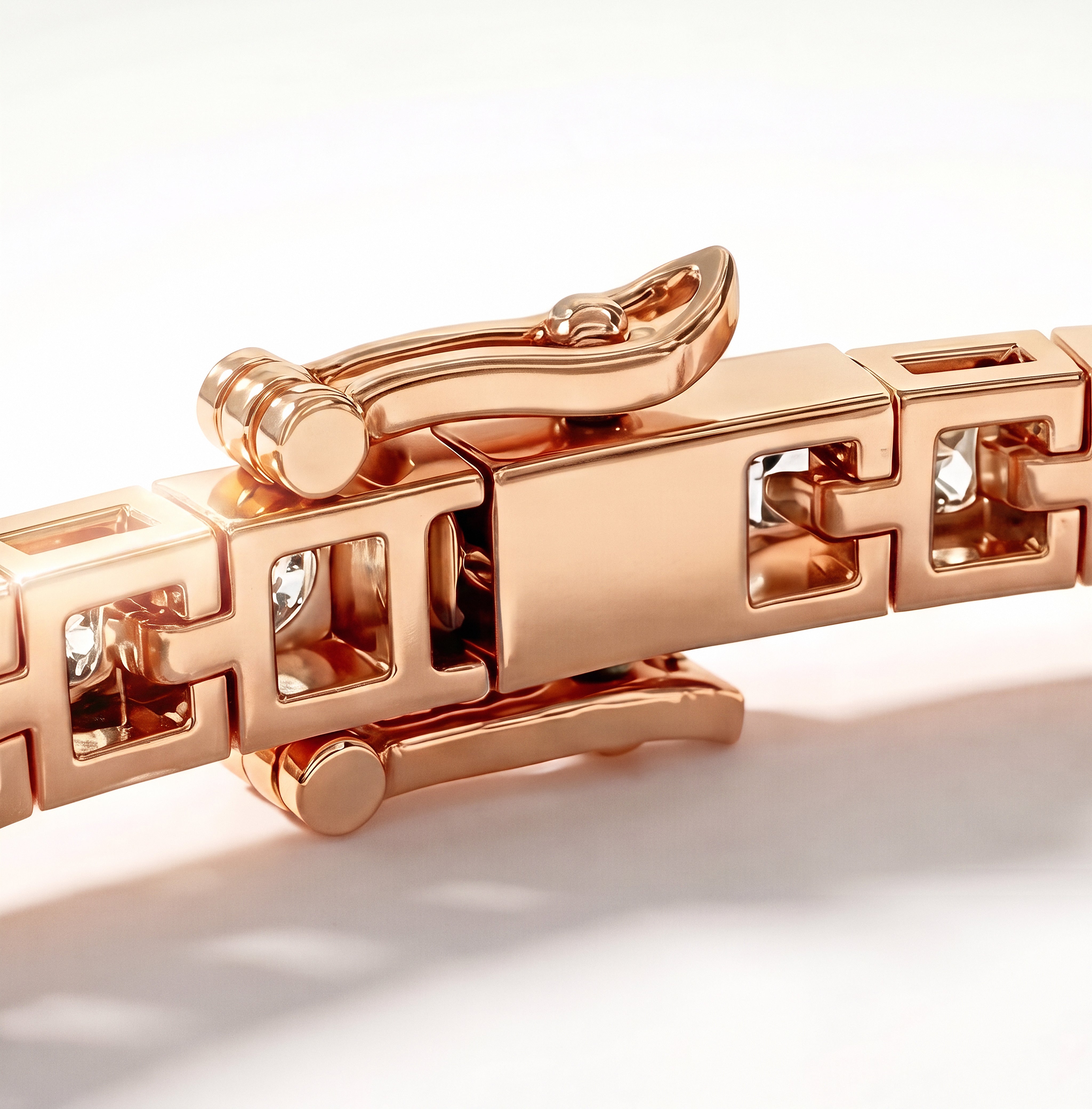
The harder problem is movement. A bracelet has to articulate — thirty-seven links hinged together, flexing every time the wrist moves, for years. Each hinge is a wear point, and the tolerance has to be tight enough that the piece lies flat and loose enough that it drapes. Too stiff and it stands away from the wrist; too free and the links gap.
At 16.58 grams of gold in 14K, this is among the heaviest pieces in the collection, and almost all of that weight is structure.
SPECIFICATIONS
Diamonds — 37 round brilliant, 4.00 mm, 0.30 ct each. 11.10 ct total.
Certification — every diamond of 0.20 ct and above ships with its certificate: GIA for natural, IGI for lab-grown.
Setting — Collet, one per stone.
Length — fixed at 7 inches.
Metal — 14K or 18K gold, in yellow, white or rose. 16.58 g at 14K, 19.51 g at 18K.
Diamond origin — natural or lab-grown, to preference.
Made to order. Two to three weeks from order to dispatch.
Bracelets are made to a fixed length and cannot be resized.

Choose options