



The "Janet" Earring Set
MODERN GEOMETRIC BRILLIANCE
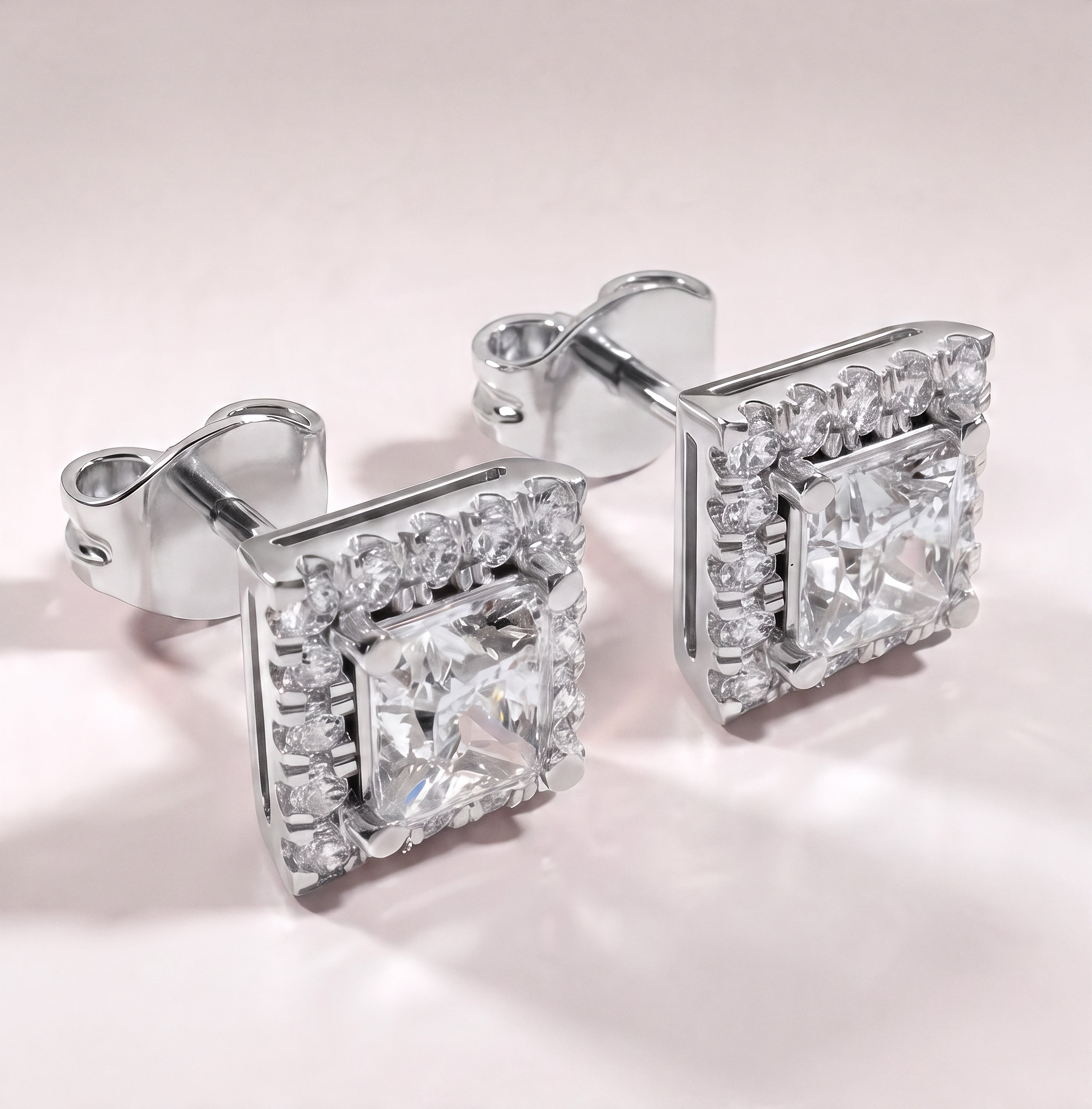
Elevate your daily ensemble with our Princess Cut Architectural Halo Studs, a striking fusion of sharp geometric precision and classic diamond fire. These earrings feature a perfectly square princess-cut center stone, framed by a tailored halo of micro-pave diamonds that accentuates its clean, linear silhouette. Cast in 14k or 18k solid Rose Gold, this pair offers a bold, structural presence that brings a contemporary edge to a timeless jewelry staple.
THE DIAMONDS
Each earring is meticulously crafted with hand-selected diamonds, matched for their exceptional brilliance and symmetrical light performance:
-
Center Princess Brilliants — Two hand-matched princess-cut diamonds serve as the radiant focal points, chosen for their sharp corners and intense, chevron-like scintillation.
-
Tailored Micro-Pave Halo — A precise square border of brilliant micro-pave diamonds encircled the center stone, amplifying its visual scale and creating a seamless field of crystalline light.
-
Estimated Total Carat Weight — Approximately 1.28 Ct.
-
Diamond Quality — VS1–VVS1 Clarity / D–F Color.
THE SETTING
The architectural framework of these earrings is engineered for maximum visual impact and secure, everyday wear:
-
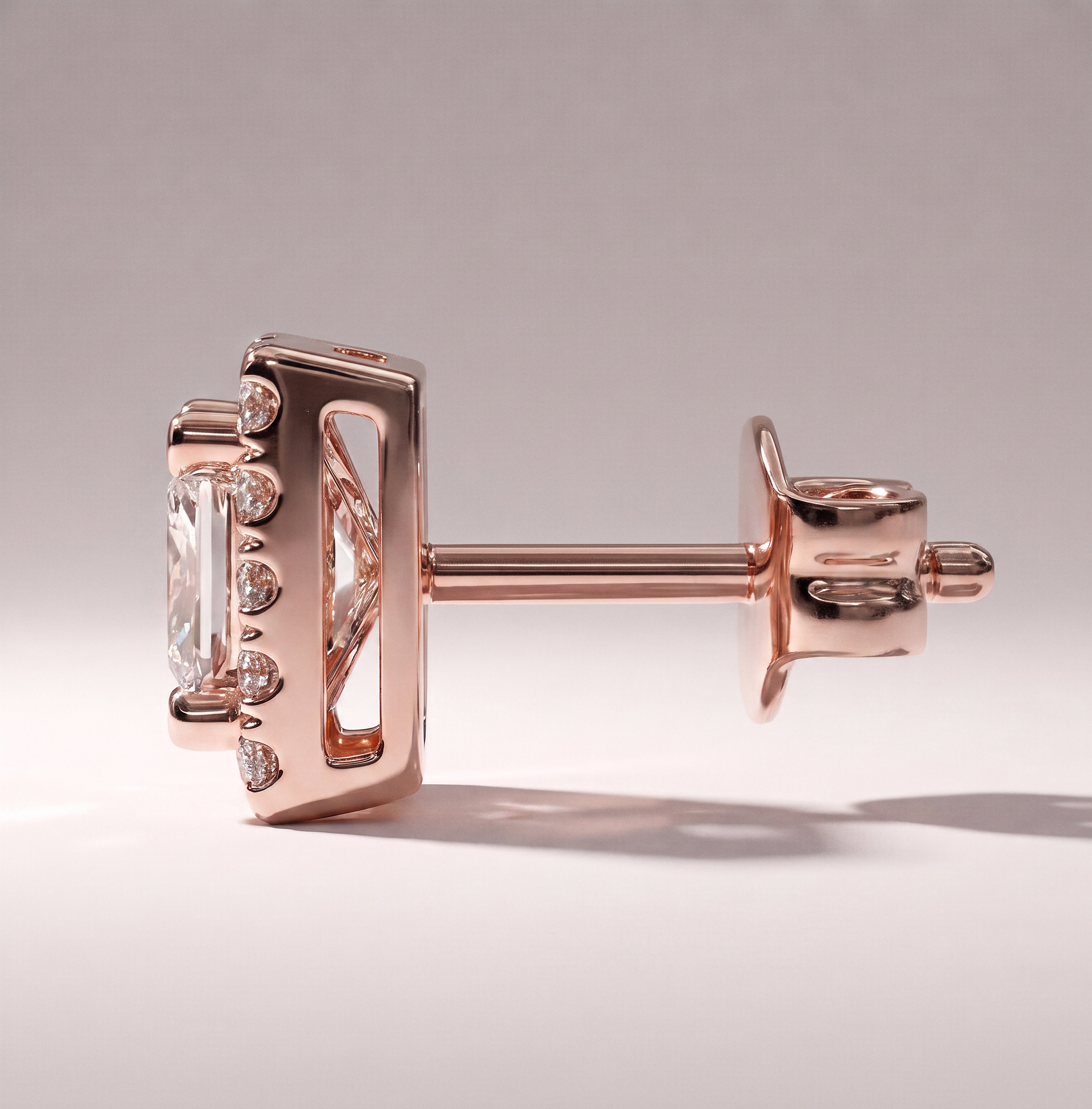
Structural Open-Work Gallery — The side profile reveals an intricate, multi-level gold framework that lifts the diamonds, allowing light to flood the pavilion for unrivaled radiance.
-
Geometric Precision — The Rose Gold setting is hand-finished to a mirror-like luster, providing a sleek, modern backdrop that highlights the sharp angles of the princess cut.
-
Balanced Flush-Fit — Designed with a balanced center of gravity, these studs sit flush and upright against the earlobe for a comfortable, sophisticated fit.
PRODUCT SPECIFICATIONS
-
Style: Princess Cut Architectural Halo Studs.
-
Metal: 14k or 18k solid Gold (Available in Yellow, White, or Rose Gold).
-
Diamond Cut: Princess Cut and Micro-Pave.
-
Setting Type: Precision Four-Prong and Square Micro-Pave Halo.
-
Clarity: VS1 – VVS1.
-
Color: D – F.
Note: Earrings are made to order for a complete customer customization experience. Please specify in notes the Clarity and Color of the Diamond or any other special request before checkout.

Choose options