

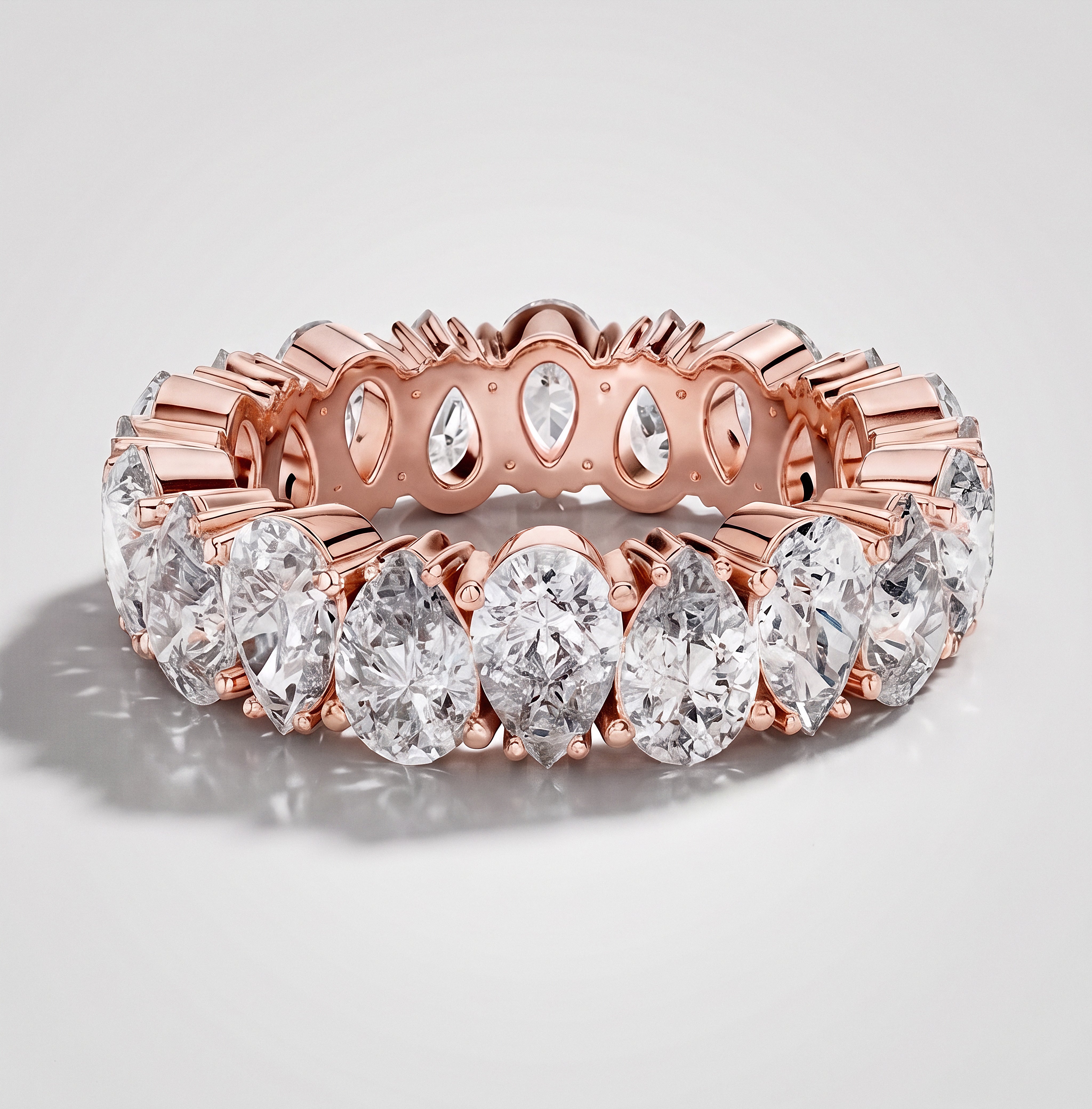



The "Keira" Eternity Ring
THE PEAR ARCHITECTURAL ETERNITY BAND
Sophistication meets sculptural artistry in our Pear Architectural Eternity Band. This masterfully crafted ring features a continuous circle of hand-selected pear-shaped diamonds, each oriented in a rhythmic, seamless sequence. The stones are held within a custom-engineered architectural gallery that elevates the diamonds, creating a voluminous, high-profile presence that celebrates light from every angle. Cast in radiant 14k or 18k Rose Gold, this band is a bold, modern interpretation of the classic eternity silhouette.
THE DIAMONDS
Every pear-shaped diamond is hand-selected and meticulously matched to ensure a perfectly uniform display of brilliance across the entire circumference:
-
Continuous Teardrop Brilliance — A full circle of hand-matched pear diamonds, chosen for their elegant proportions and exceptional light return.
-
Estimated Total Carat Weight — Approximately 4.98 Ct.
-
Diamond Quality — VS1–VVS1 Clarity / D–F Color.
THE SETTING
The framework of this band is a showcase of precision jewelry engineering, designed for high-impact visual appeal and exceptional durability:
-
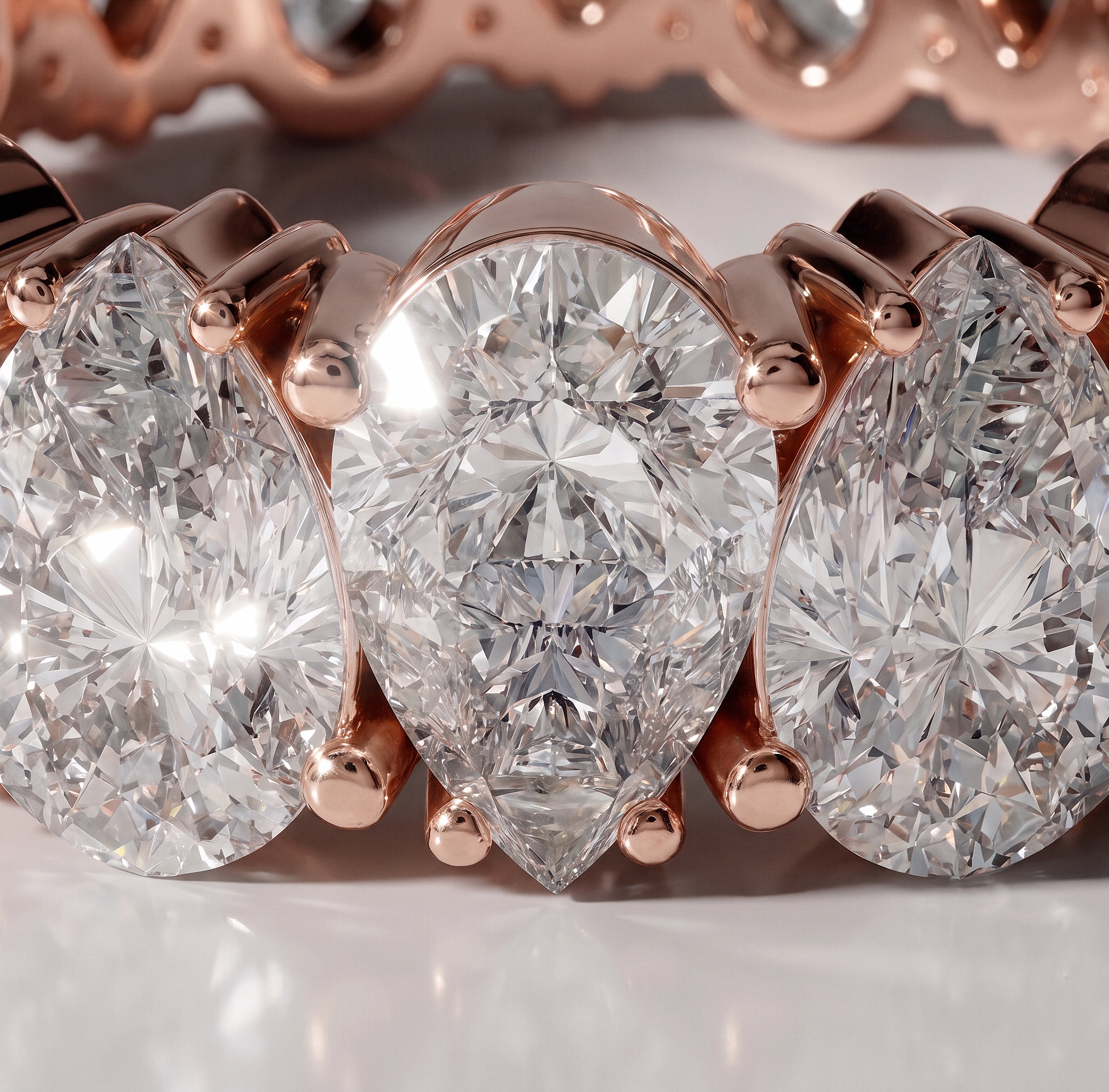
Sculptural Open-Work Gallery — The side profile reveals an intricate network of polished rose gold prongs and structural supports. This "floating" effect prioritizes the visibility of the diamonds while adding a sophisticated geometric texture.
-
Precision Multi-Prong Security — Each diamond is secured by a bespoke prong configuration tailored to the pear's unique geometry, protecting the delicate points without compromising the aesthetic flow.
PRODUCT SPECIFICATIONS
-
Style: Pear Architectural Eternity Band.
-
Metal: 14k or 18k solid Gold (Available in Yellow, White, or Rose Gold).
-
Diamond Cut: Pear
-
Setting Type: Precision Architectural Multi-Prong.
-
Clarity: VS1 – VVS1.
-
Color: D – F.
Note: Eternity bands are made to order and custom-sized to your exact measurements. Because the diamonds encircle the entire band, these rings cannot be resized once produced. Please ensure accurate sizing before finalizing your order.

Choose options