

The "Violet" Earring Set
THE ART OF LINEAR RADIANCE
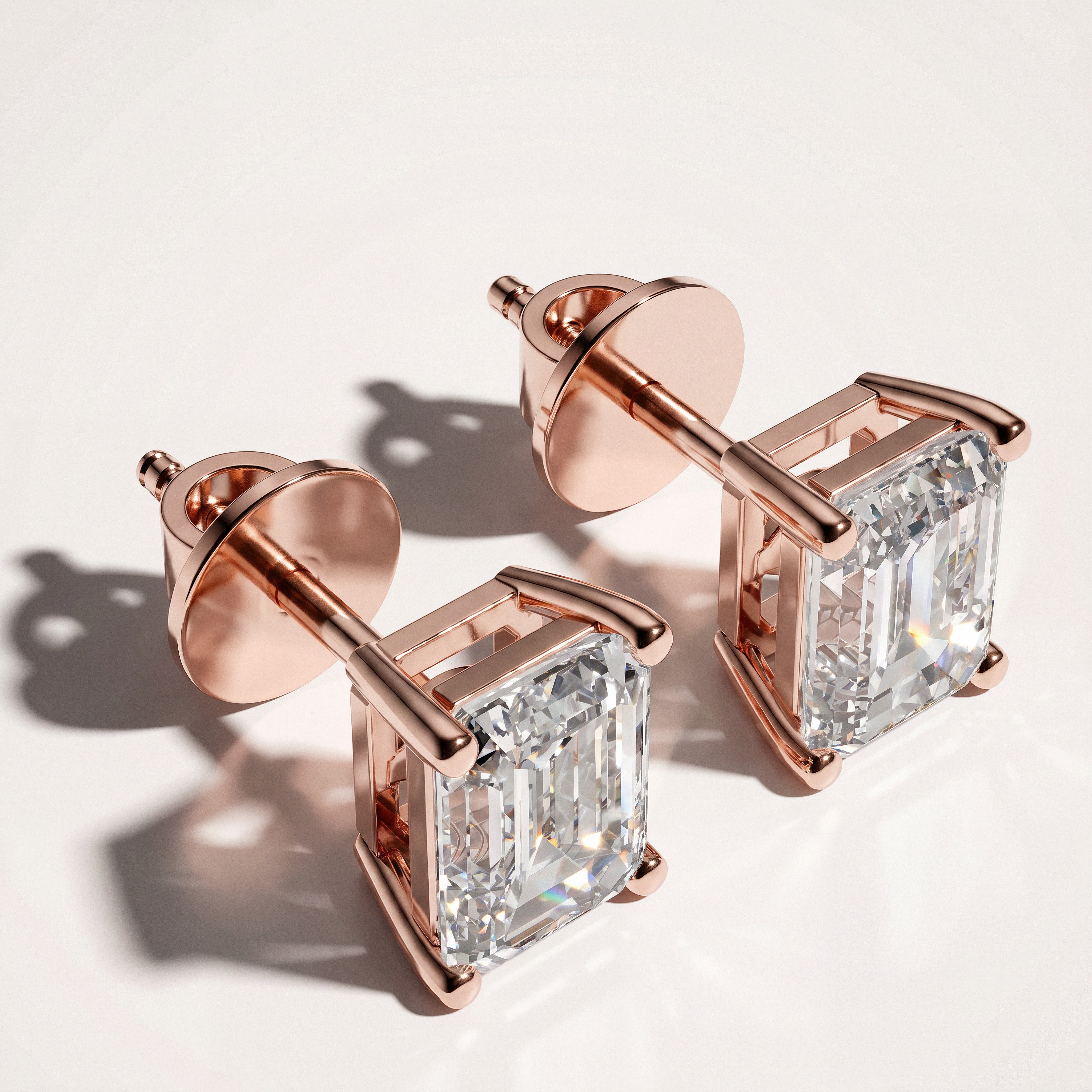
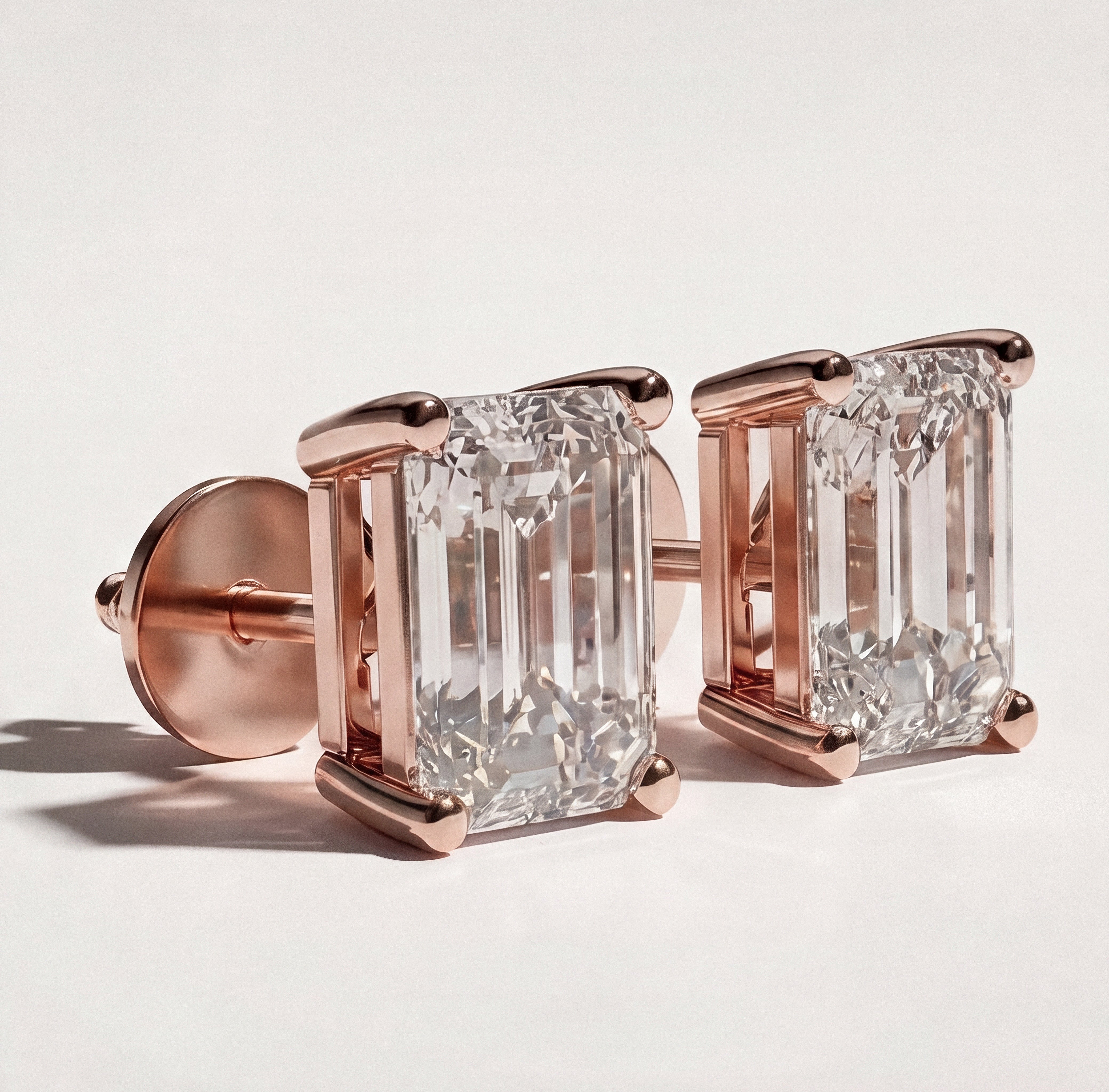
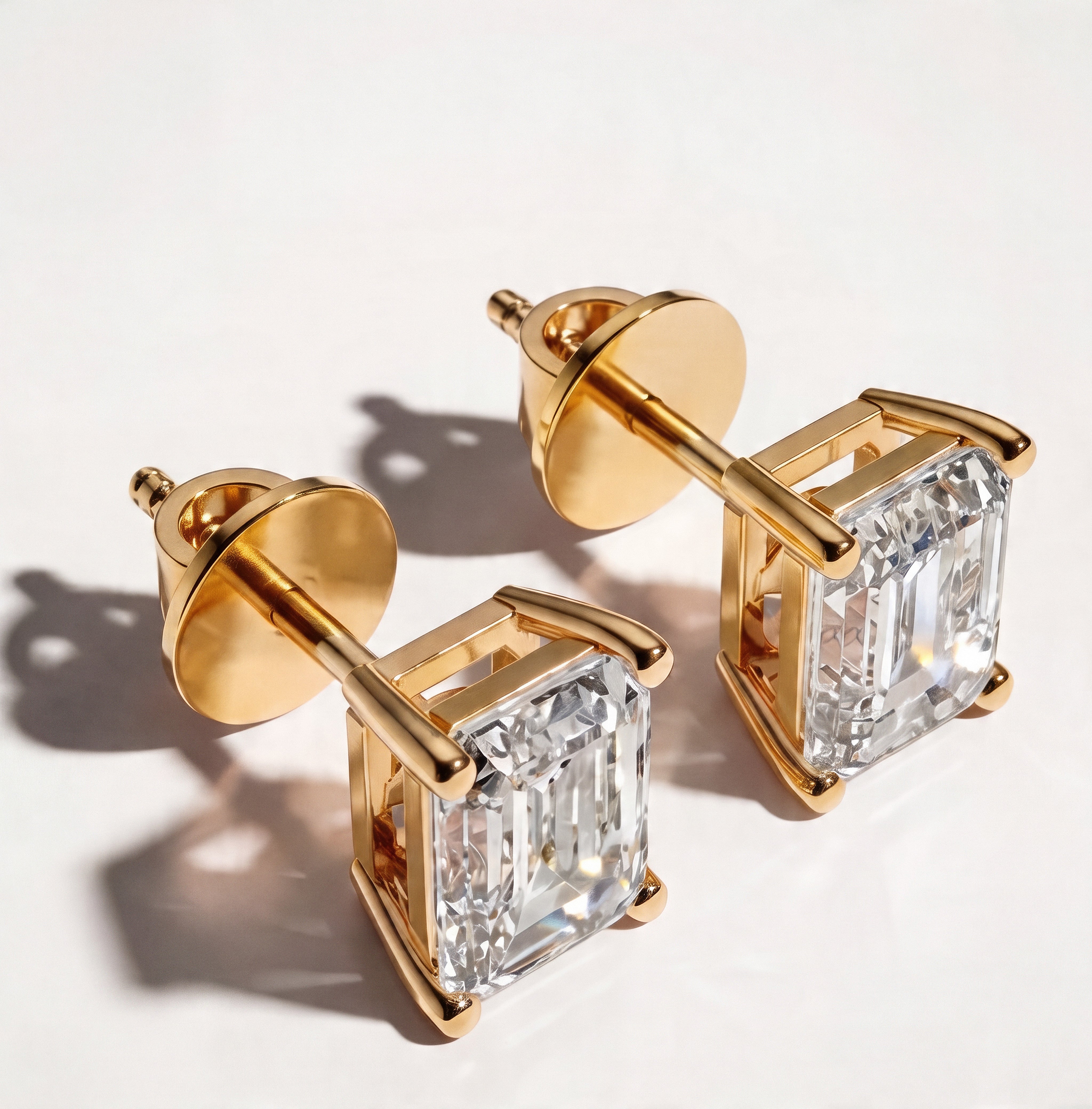
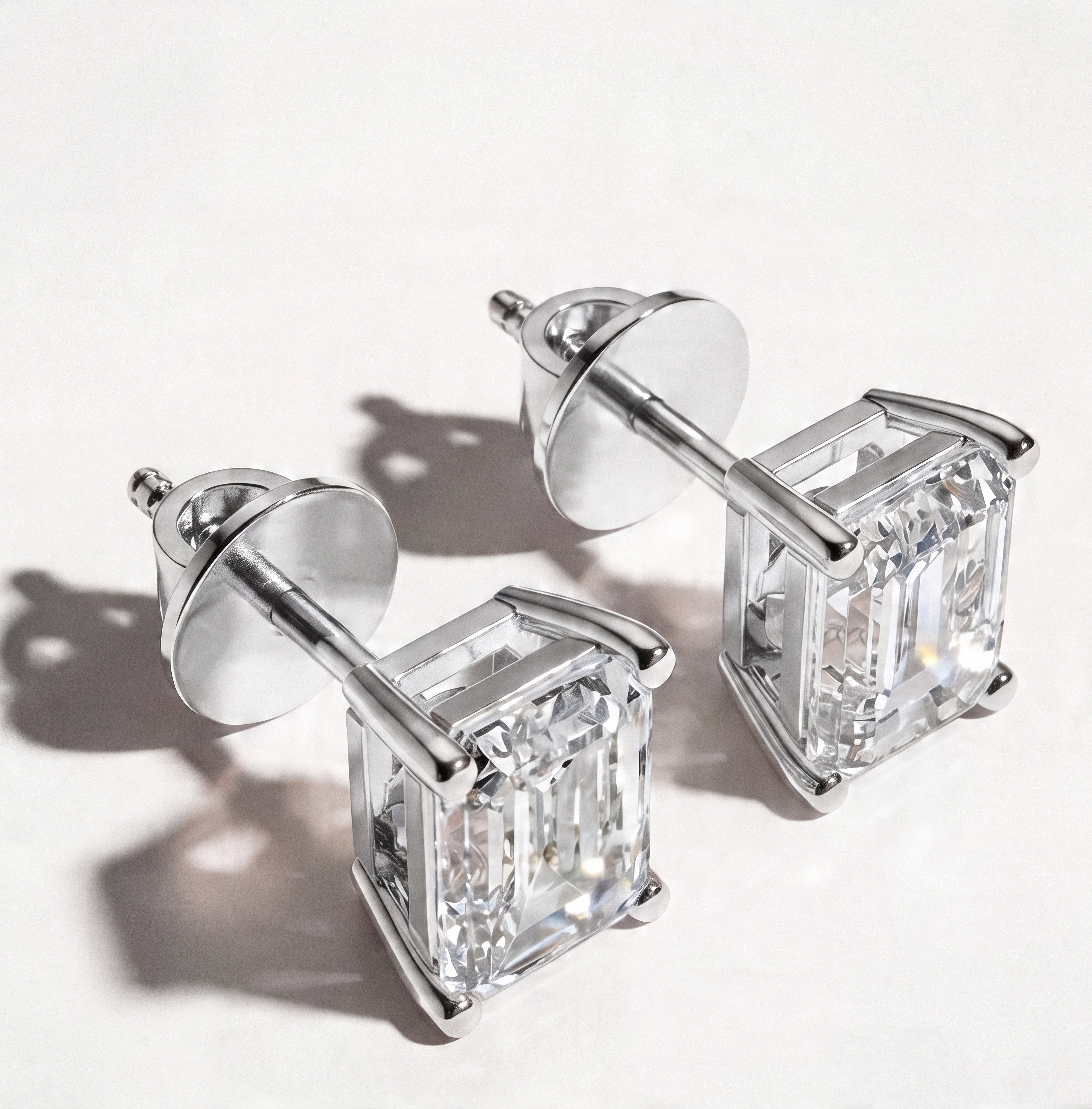
A masterclass in geometric precision, our Emerald Architectural Solitaire Studs are designed for those who appreciate the sophisticated "hall of mirrors" effect unique to the emerald cut. These earrings reimagining the classic solitaire by housing each diamond in a striking, multi-tiered structural gallery that emphasizes the clean, parallel facets of the stone. Cast in 14k or 18k solid Rose Gold, this pair offers a voluminous, high-profile silhouette that brings a modern, architectural edge to a timeless vintage cut.
THE DIAMONDS
Each earring features a hand-selected emerald-cut diamond, curated for its exceptional clarity and precise step-cut proportions:
-
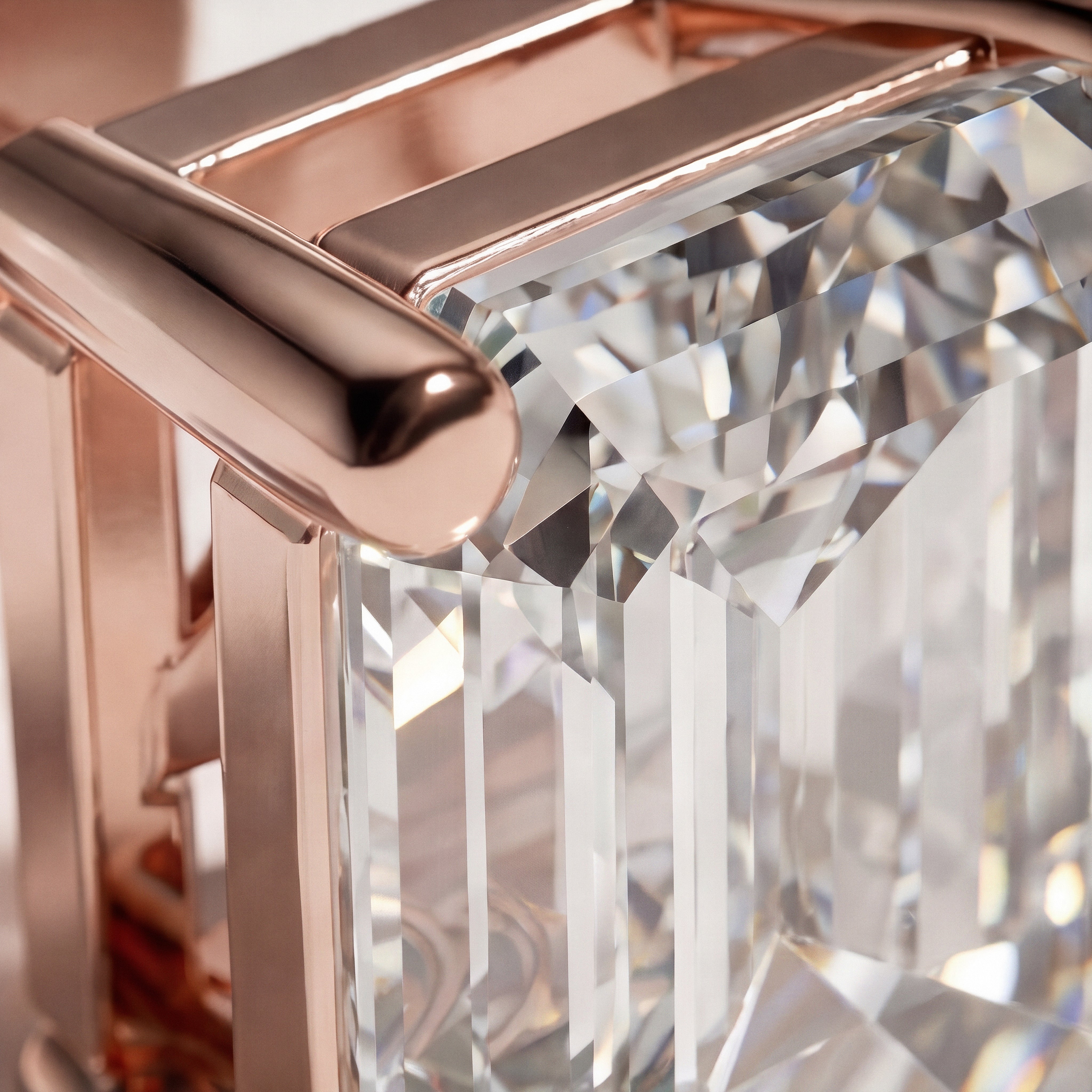
Step-Cut Scintillation — Two hand-matched emerald-cut diamonds serve as the radiant focal points, chosen for their long, linear facets and intense crystalline transparency.
-
Structural Definition — The signature rectangular silhouette is accentuated by the elevated gold frame, which protects the corners while allowing the diamond’s depth to be the primary focus.
-
Estimated Total Carat Weight — Approximately 2.50 Ct.
-
Diamond Quality — VS1–VVS1 Clarity / D–F Color.
THE SETTING
The setting is a showcase of precision jewelry engineering, designed to lift the diamond and maximize its architectural impact:
-
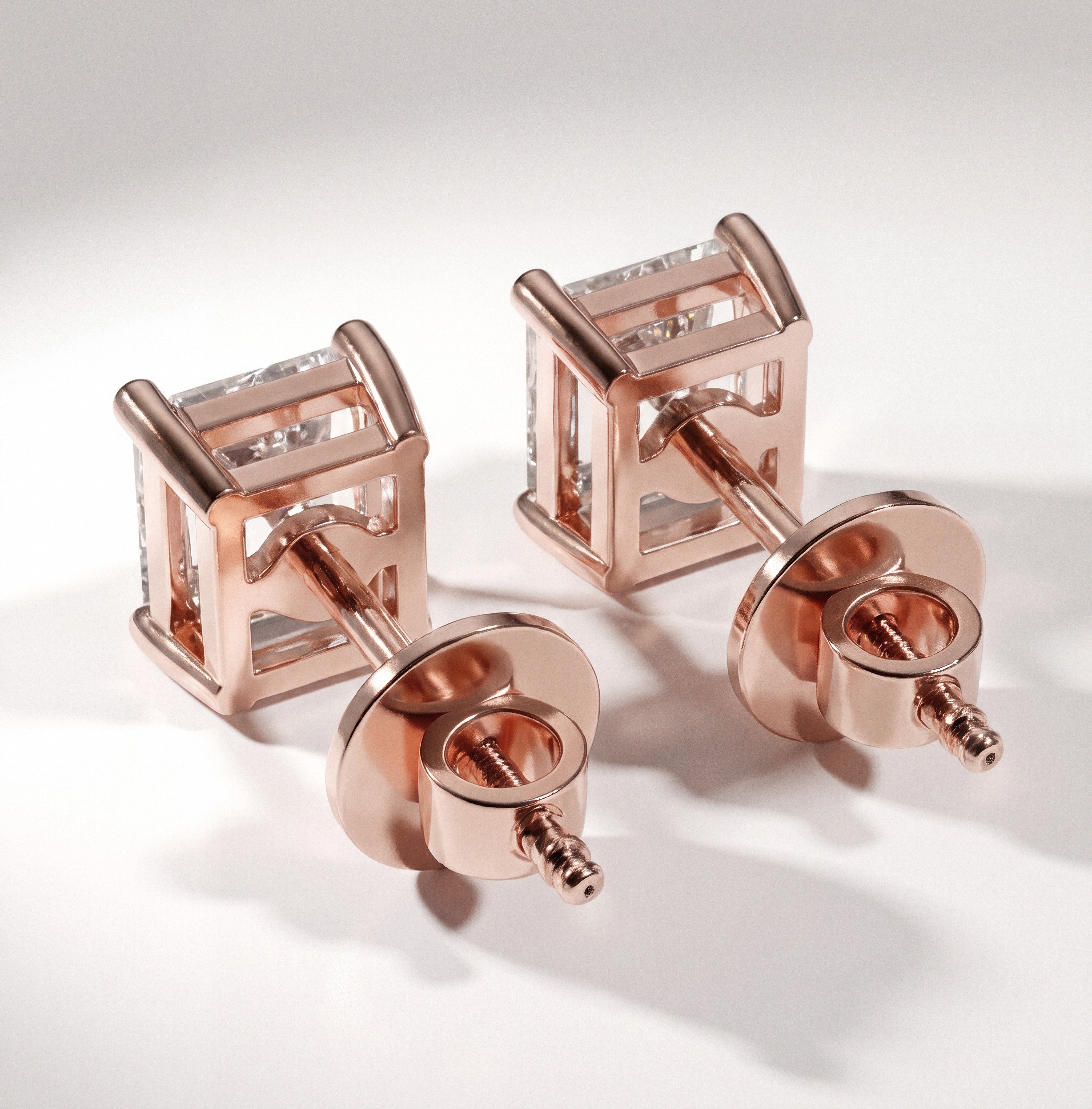
Tiered Architectural Gallery — The side profile reveals an intricate, triple-ribbed gold framework. This elevated architecture allows light to flood the diamond from the sides and pavilion, ensuring the stone’s internal steps are brilliantly illuminated.
-
Structural Stability — Despite the high-profile design, the settings are engineered with a balanced base that sits flush and secure against the earlobe, maintaining a perfectly upright position.
-
Artisanal Finish — The Rose Gold is hand-polished to a high-luster mirror finish, providing a sleek, warm glow that enhances the icy transparency of the emerald-cut diamonds.
PRODUCT SPECIFICATIONS
-
Style: Emerald Architectural Solitaire Studs.
-
Metal: 14k or 18k solid Gold (Available in Yellow, White, or Rose Gold).
-
Diamond Cut: Emerald Cut (Step-Cut).
-
Setting Type: Precision Tiered Architectural Multi-Prong.
-
Clarity: VS1 – VVS1.
-
Color: D – F.
Note: Earrings are made to order for a complete customer customization experience. Please specify in notes the Clarity and Color of the Diamond or any other special request before checkout.

Choose options