
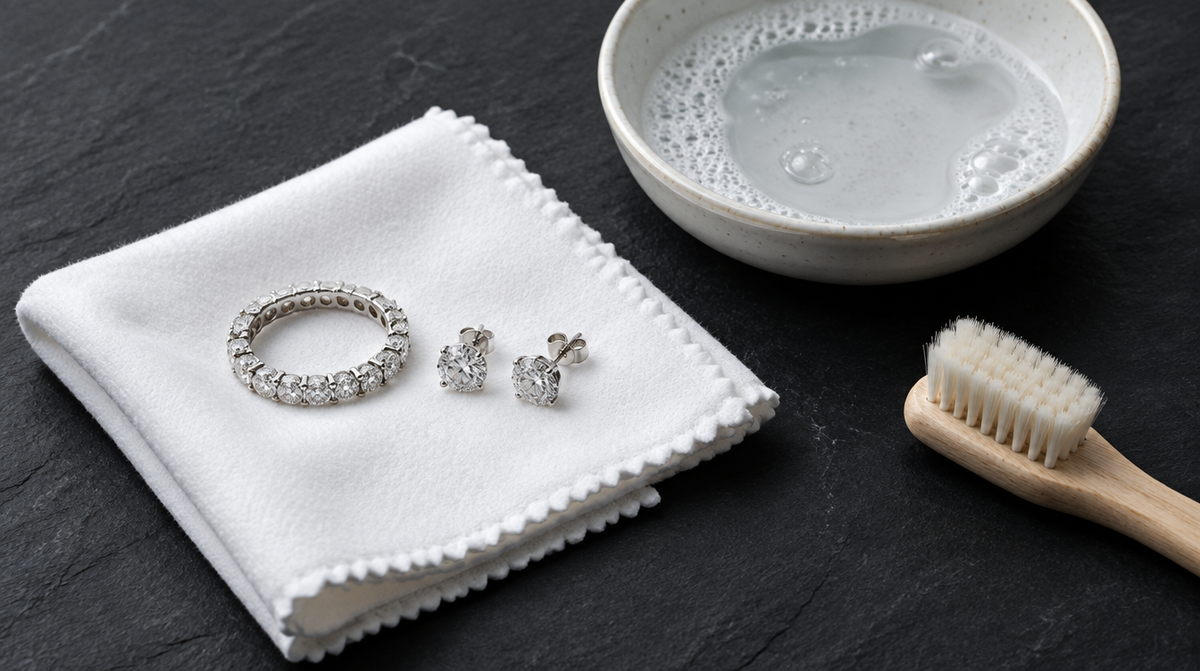
How to Care for Fine Diamond Jewelry
Author: Seventyninth Avenue
Why diamonds lose their sparkle
Diamonds are the hardest natural material on earth, but they attract oil. Lotion, sunscreen, hand soap, and the natural oils on your skin build a film across the surface and underneath the stone, and that film blocks the light that makes a diamond come alive. A dull diamond is almost never a damaged diamond. It is usually a dirty one, and ten minutes of care brings it back.
The at-home cleaning method
- Fill a small bowl with warm water and add a few drops of mild dish soap. Not hot water, and nothing with bleach or abrasives.
- Soak the piece for 20 to 30 minutes to loosen the film.
- Brush gently with a soft toothbrush kept only for this purpose, paying attention to the underside of the stones where oil collects.
- Rinse in clean warm water. If you rinse in the sink, close the drain first.
- Pat dry with a soft lint-free cloth and let it air dry completely before storing.
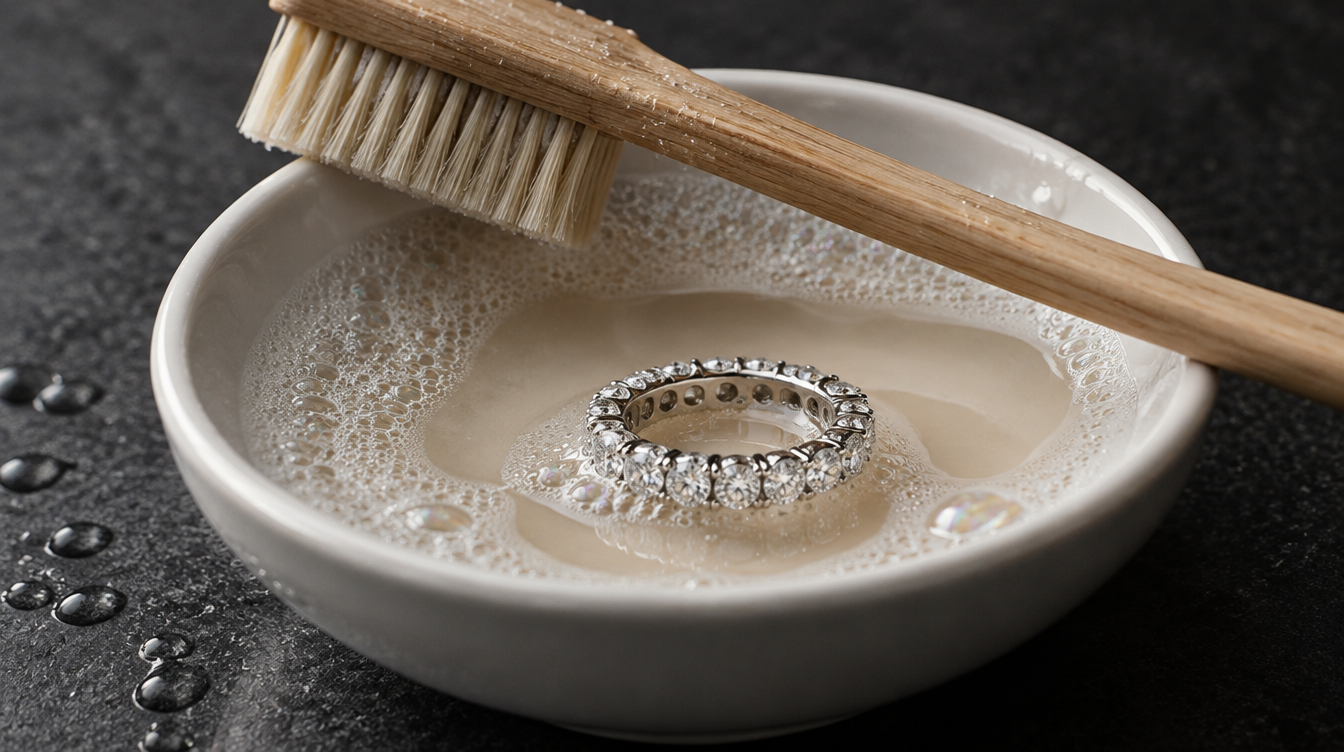
Doing this every two to four weeks is enough for a ring worn daily.
What to avoid
- Chlorine and bleach. Chlorine attacks the alloys in gold over time and can weaken prongs. Take rings off before swimming or using household cleaners.
- Toothpaste and baking soda. Both are abrasive and will scratch gold, especially softer 18K.
- Ultrasonic cleaners at home. They work well in trained hands, but vibration can loosen stones in pave and collet settings. Leave these to a jeweler.
- Lotion and perfume over jewelry. Put your jewelry on last, after makeup, fragrance, and hairspray.
When to take pieces off
Most damage happens during ordinary activity rather than dramatic accidents. Remove your jewelry before lifting weights or using gym equipment, gardening or doing manual work, applying lotion or self-tanner, swimming in pools or the ocean, and sleeping if you wear a piece with raised stones.
Storing gold and diamonds properly
Diamonds scratch everything, including other diamonds and the gold they are set in. Never store pieces loose together in one box.
- Keep each piece in its own soft pouch or a lined compartment.
- Lay bracelets and necklaces flat or hang them so chains do not kink.
- Store in a dry place. Humidity dulls the finish on gold over time.
- Fasten clasps before putting a piece away so it cannot tangle.
Caring for different gold colors
Yellow and rose gold need little beyond regular cleaning; both develop a soft patina with wear that many people prefer. White gold is typically plated with rhodium for its bright white finish, and that plating wears thin over years of daily wear, leaving a warmer tone underneath. Re-plating restores it and is a routine service at any fine jeweler. Rose gold gets its warmth from copper in the alloy, which is slightly harder than yellow gold and holds up well.
Have your settings checked
Once a year, have a jeweler inspect the prongs, collets, and clasps on pieces you wear often. Prongs wear down gradually and a loose stone gives very little warning before it is lost. A quick check costs almost nothing compared to replacing a center stone.
You can also check between visits: hold the ring close to your ear and tap it lightly. A faint rattle means a stone has moved and needs attention.
Lab-grown and natural diamonds
Lab-grown diamonds are chemically and physically identical to natural diamonds, so they need identical care. There is no separate routine for one or the other, and nothing about a lab-grown stone makes it more fragile. If you are still deciding between the two, our guide on lab-grown versus natural diamonds breaks it down.
Questions about your piece
Care needs vary by design, especially for pave and collet-set pieces. See our frequently asked questions, look into the SAV Card, or get in touch and we will advise on your specific piece.
Read more
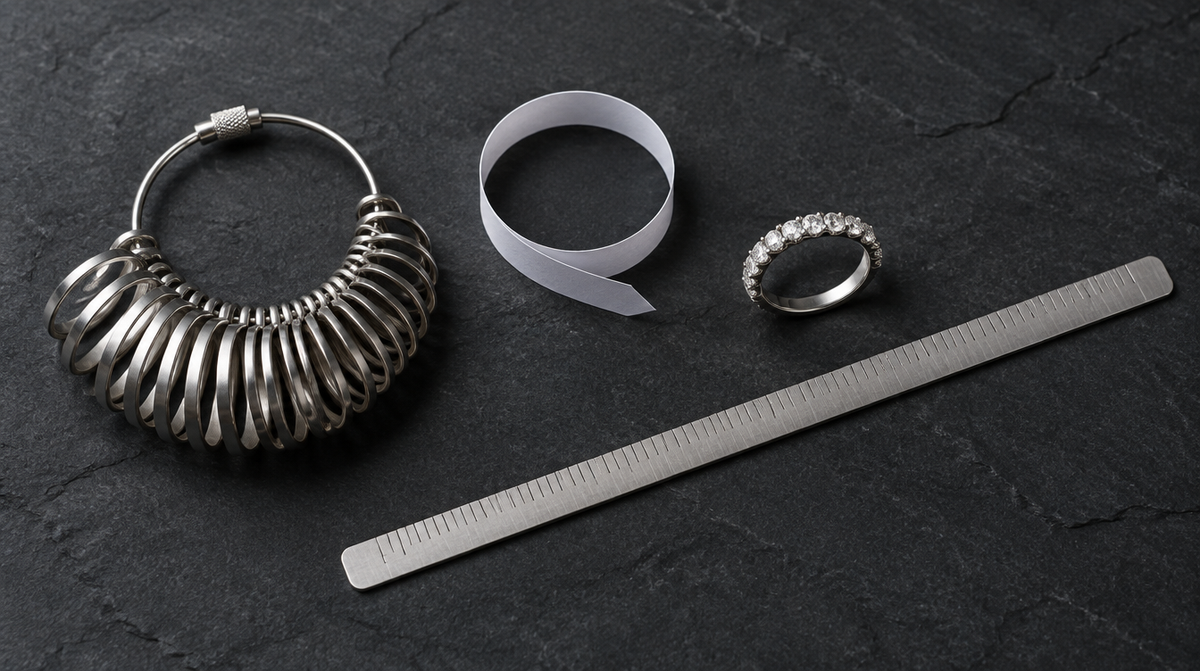
Ring Size Guide: How to Measure Your Ring Size at Home
A step-by-step guide to finding your ring size at home, including a printable-free string method, sizing tips for eternity bands and wide rings, an...
Ring Size Guide: How to Measure Your Ring Size at Home
A step-by-step guide to finding your ring size at home, including a printable-free string method, sizing tips for eternity bands and wide rings, an...